Role: Product Designer, Product Manager
The Problem
Traditional economic complexity tools rely on relatedness-complexity diagrams to guide diversification decisions — a useful but inherently limited approach. Visually inspecting these diagrams does not guarantee optimal recommendations, as it fails to account for path dependencies and the full structure of an economy's existing productive capabilities. Policymakers needed a more rigorous, mathematically grounded method to identify which industries and export sectors to prioritise — and why.

My Role
As both Senior PM and Lead Product Designer, I owned the full product lifecycle — from translating complex academic research into a coherent product vision, to designing the end-to-end user experience and driving cross-functional delivery with engineers and data scientists.
Defined the product strategy and roadmap, aligning research output from the Center for Collective Learning with real-world government use cases
Led discovery research with economists, policy advisors, and institutional stakeholders to map user needs and decision-making workflows
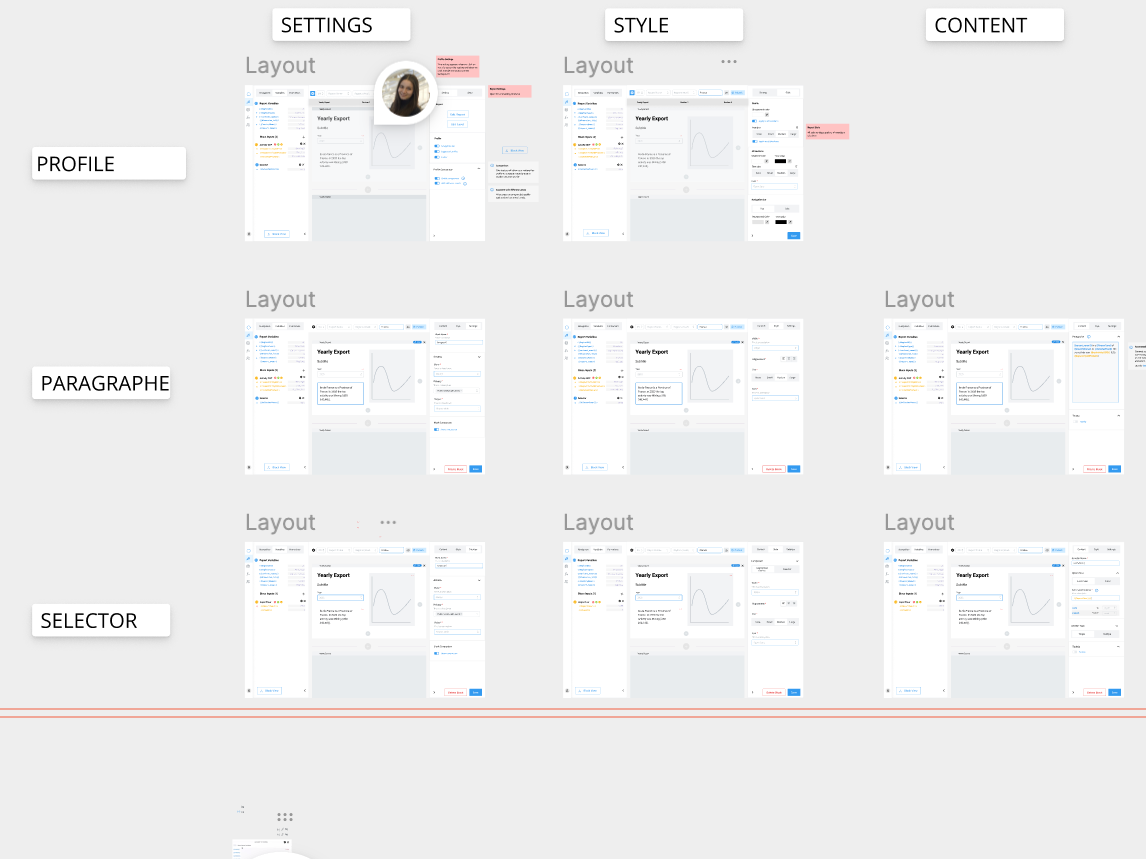
Designed the end-to-end UX in Figma — from information architecture and data visualisation flows to interactive prototypes and usability testing
Translated advanced ML optimization models into intuitive, interpretable interfaces accessible to non-technical policy audiences
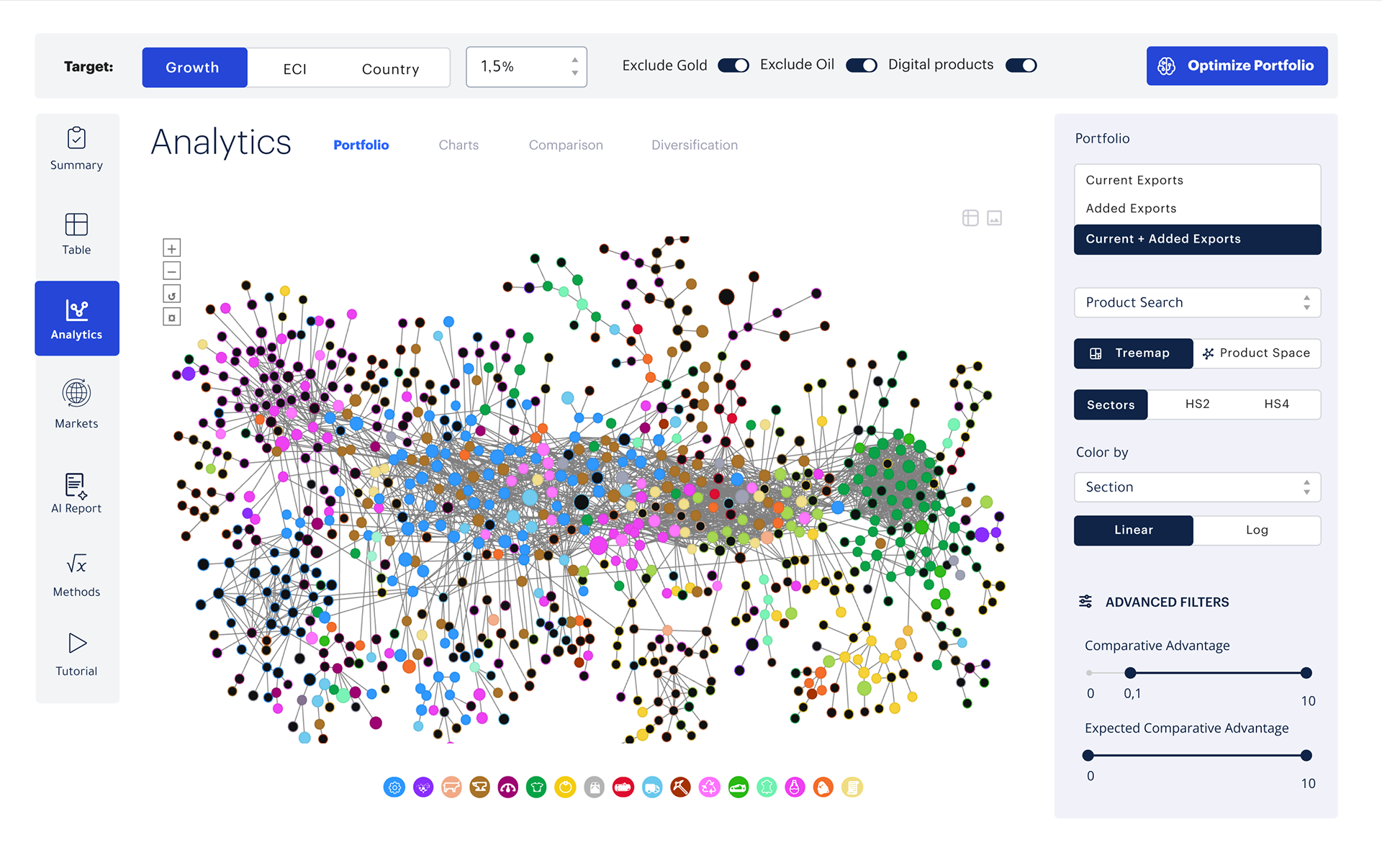
Partnered with data scientists to ensure the frontend accurately surfaced model outputs — including diversification pathways, relatedness scores, and complexity rankings — in a clear, actionable format
Design Challenges
The core design challenge was one of translation: making a mathematically sophisticated optimization model legible and actionable for users who are domain experts in economics and policy, but not in machine learning. This required deep collaboration with researchers to understand the model's logic, iterative prototyping to test how users interpreted outputs, and careful information hierarchy to guide decision-making without oversimplifying the underlying complexity.
AI reporting
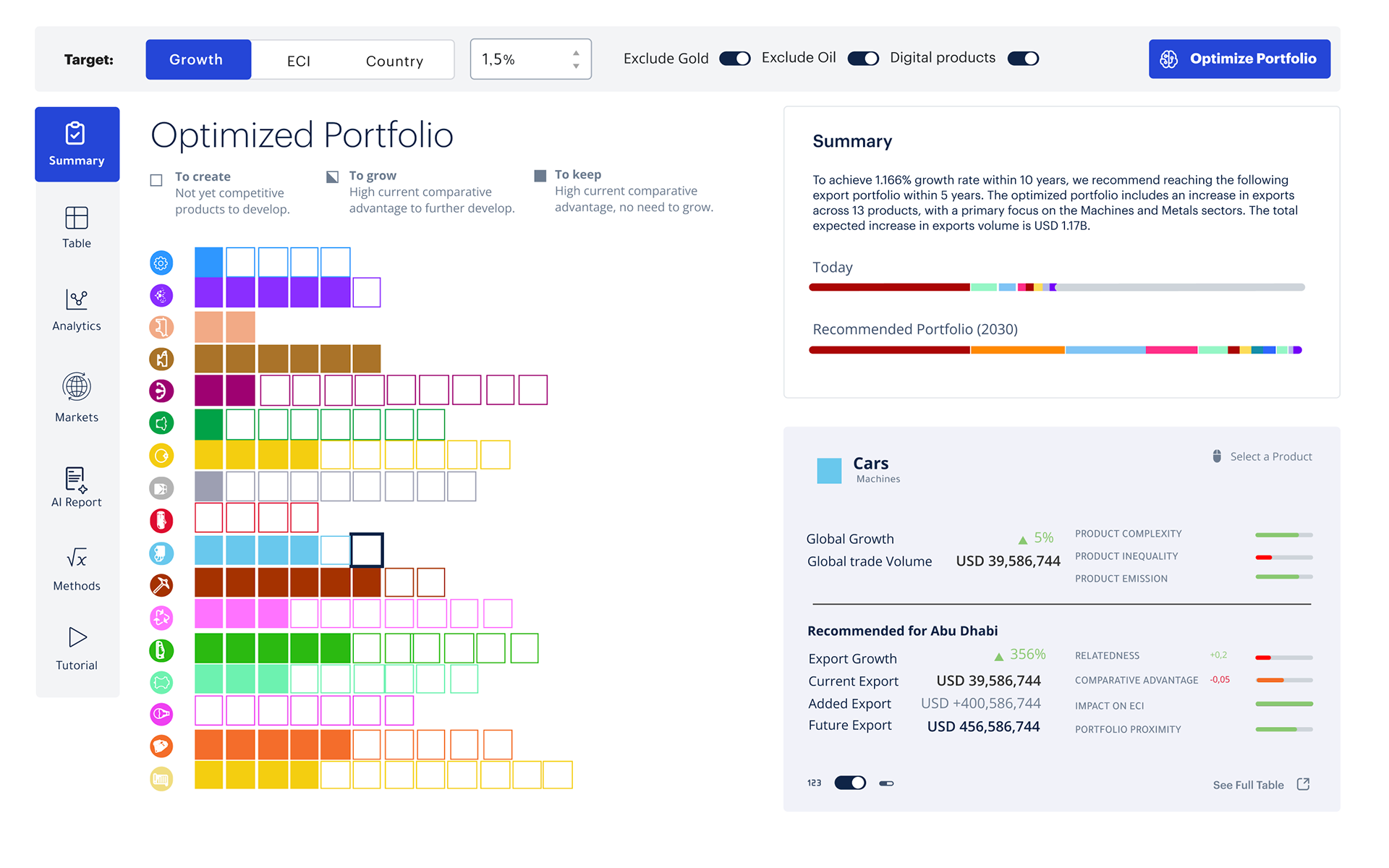
How to translate this portfolio in a comprehensive story? This project was the opportunity to experiment with AI, to transform this optimised portfolio in a concrete action plan. The report synthesise the portfolio, explain the key concepts to non expert users, and creates a roadmap of next steps to accomplish to reach the Optimised portfolio, identifying key players, challengers and opportunities. We found this synthetic way of reporting extremely useful for the user, resulting in great adoption.
Impact
The tool advances the policy toolkit for economic complexity by providing governments with a structured, data-driven framework for strategic diversification — moving beyond visual heuristics to a formally optimised approach. It has been deployed to support national economic strategies across multiple countries, helping ministries of trade and investment identify high-potential sectors, benchmark against peer economies, and build evidence-based industrial policy.